

Expanding into international markets creates new opportunities for eCommerce businesses, but reaching customers in another country is only the beginning. A business must also deliver a shopping experience that feels familiar, process payments reliably, meet local regulatory requirements, manage international fulfilment, and maintain consistent operations across markets.
The opportunity is significant. According to DHL’s 2026 E-Commerce Trends Report, 70% of global shoppers have purchased from retailers outside their home country, up from 60% in 2025. Furthermore, 45% of shoppers make cross-border purchases at least once a month. However, international demand does not automatically translate into business growth. Delivery costs, customs duties, payment preferences, trust, and returns continue to influence purchasing decisions.
For businesses planning international expansion, the challenge is therefore not simply making a store available in more countries. It is building a commerce ecosystem capable of supporting different markets without introducing unnecessary operational complexity.
This article explores a practical framework for assessing cross-border eCommerce readiness, from market selection and localization to technology architecture, compliance, and performance management.
1. International Expansion Starts With Market Readiness, Not Market Reach
One of the most common mistakes in international expansion is treating global demand as a single opportunity. In reality, every market has different customer expectations, purchasing behaviours, competitive conditions, infrastructure, and regulatory requirements.
A business may receive international traffic from several countries, but that does not necessarily mean every country represents a viable expansion opportunity. Before investing in localization or technology development, companies need to understand where demand exists and whether the business can serve that demand profitably.
Market selection should consider more than website traffic or population size. Existing international orders, customer enquiries, product demand, average order value, competitor positioning, shipping feasibility, and expected acquisition costs can provide a more realistic picture of market potential.
For example, a fashion retailer may identify strong demand in the United States and Australia, while a B2B supplier may find better opportunities in selected European markets where its product range addresses a specific industry requirement. The appropriate expansion strategy depends on the product, target audience, commercial model, and ability to fulfil orders reliably.
DHL’s 2026 cross-border research also highlights differences between markets. While 70% of global shoppers purchase internationally, the proportion varies considerably by country. For example, 74% of Australian shoppers and 84% of Saudi Arabian shoppers reported buying from retailers in other countries. These differences reinforce the importance of evaluating individual markets rather than assuming that global demand is evenly distributed.
A structured market assessment should answer three questions:
- Is there sufficient demand? Evaluate existing traffic, international orders, customer enquiries, and product-market fit.
- Can the business compete? Assess local competitors, pricing expectations, product availability, and customer acquisition costs.
- Can the business operate profitably? Consider delivery costs, duties, taxes, returns, payment fees, and the resources required to support the market.
The objective is to prioritize markets based on commercial viability, not simply the number of countries a business can technically serve.
2. Localization Must Cover the Entire Customer Journey
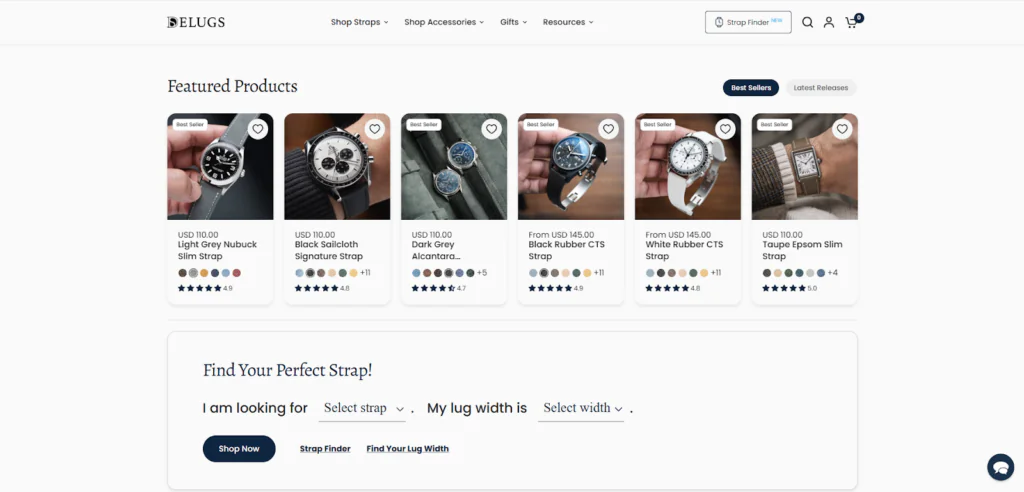
Localization is often understood as translating website content into another language. However, a translated storefront does not necessarily provide a localized shopping experience.
International customers evaluate a brand through multiple touchpoints, including product discovery, pricing, checkout, payment, delivery information, and post-purchase communication. If these elements do not reflect local expectations, customers may hesitate even when the products themselves are relevant.
According to DHL’s 2026 cross-border research, 63% of surveyed businesses adapt their online stores with local languages and currencies for the markets they serve. The same research identifies free delivery, secure payment options, free returns, and local currency pricing as important factors that encourage international purchases.
This means localization needs to be considered as a connected customer experience rather than a translation project.
Language, currency, and regional content
Product descriptions, navigation, promotional messages, checkout instructions, and customer support information should be adapted to the target market. Translation should also account for local terminology, cultural context, product naming conventions, and relevant measurement formats.
Currency presentation requires similar attention. Customers should be able to understand the actual cost of a product without having to calculate exchange rates themselves. Where appropriate, businesses should also consider market-specific pricing rather than simply converting the domestic price using an exchange rate.
Product availability and pricing
Not every product should necessarily be available in every market. Product restrictions, local demand, shipping limitations, and regulatory requirements may affect what a business can sell internationally.
Market-specific catalogues and pricing rules help businesses manage these differences while maintaining control over the overall product offering.
Checkout and payment preferences
Payment preferences vary across countries. A payment method that performs well in one market may not be familiar or widely used in another.
Businesses should evaluate local payment methods alongside international credit and debit cards, digital wallets, and other relevant payment options. The payment experience must also communicate transaction security, currency, and any additional charges clearly.
Customer support and post-purchase communication
Localization should continue after the transaction. Customers need clear order confirmations, delivery updates, return instructions, and access to support in a language they can understand.
For international customers, uncertainty about delivery and returns can become a significant source of friction. A consistent post-purchase experience helps build confidence and supports long-term customer relationships.
The key principle is that international customers should not feel as though they are navigating a domestic store that happens to accept overseas orders. The experience should reflect the expectations of the market they are purchasing from.

3. Commerce Architecture Must Support Multiple Markets Without Creating Operational Complexity
As businesses expand, managing multiple markets through disconnected storefronts, applications, and manual processes can become increasingly difficult.
A scalable cross-border eCommerce architecture needs to balance centralized control with market-specific flexibility. Businesses should be able to manage core product information, inventory, customer data, and commercial operations consistently while accommodating differences in language, currency, pricing, taxes, and fulfilment.
The architecture should be designed around how the business actually operates, not simply around the number of storefronts it wants to launch.
Choosing the right multi-market structure
There are several ways to organize an international commerce operation. A business may manage multiple markets through a centralized storefront with localized market experiences, or it may operate separate regional storefronts when commercial, operational, or regulatory requirements justify that approach.
The right structure depends on the number of markets, catalogue complexity, localization requirements, team responsibilities, and integration needs.
For example, a company expanding into several English-speaking markets may initially benefit from a centralized platform with market-specific currencies, pricing, and shipping configurations. A larger organization with distinct regional teams, catalogues, and operational systems may require a more distributed architecture.
The decision should account for long-term maintenance and governance, not only initial implementation costs.
ERP, CRM, PIM, and inventory integration
International commerce introduces additional data and workflow requirements.
An eCommerce platform may need to exchange information with an ERP for orders and inventory, a CRM for customer relationships, a PIM for product information, and a WMS for warehouse and fulfilment operations.
These systems must work together reliably. For example, a customer placing an order in one market may trigger order processing in the ERP, inventory updates across relevant channels, fulfilment instructions for a warehouse, and delivery notifications through the storefront.
The development team needs to establish which system owns each type of data, how information is synchronized, and what happens when an integration fails.
Without a clear integration architecture, businesses may experience inaccurate inventory, inconsistent product information, delayed order processing, and unnecessary manual work.
Platform flexibility and scalability
The commerce platform should support the business’s current requirements while allowing room for future market expansion.
Shopify can support international selling through Shopify Markets, which provides functionality for managing market-specific experiences, including domains, languages, currencies, pricing, and product availability. Its localization capabilities also support different approaches to automatic and manual market selection.
However, not every business has the same technical requirements. Complex integrations, specialized workflows, custom pricing rules, or advanced frontend requirements may require additional development or architectural consideration.
The decision to use standard platform functionality, applications, custom development, or a more flexible architecture should be based on actual business needs.
A scalable system is not necessarily the most complicated system. It is one that supports expansion without creating disproportionate maintenance costs or operational dependencies.
ECOMMERCE GROWTH
Shopify Speed Optimization: The 6 Hidden System Failures Slowing Down Your Store
A Shopify store can look polished, offer excellent products, and attract qualified traffic while still losing potential customers because of performance problems hidden beneath the storefront.
4. International Payments, Tax, and Customs Must Be Built Into the Operating Model
Cross-border transactions introduce financial and regulatory considerations that businesses cannot afford to leave until after launch.
Customers need to understand how much they will pay, which currency will be charged, whether additional taxes or duties apply, and who is responsible for those costs. At the same time, businesses need processes that support accurate payment collection, tax reporting, customs documentation, and order fulfilment.
Payment processing and currency management
International payment readiness involves more than displaying different currencies on a product page.
Businesses should assess whether their payment provider supports the target markets, which payment methods are available, how transactions are settled, and what fees or foreign exchange costs apply.
They should also monitor payment authorization rates, failed transactions, chargebacks, and potential fraud patterns by market. These indicators help identify whether payment issues are affecting international conversion.
Tax obligations and customs duties
Tax and customs requirements vary by destination, product category, transaction value, and selling model. Businesses need to understand their obligations before accepting orders from a new market.
For example, the European Union uses the One Stop Shop (OSS) and Import One Stop Shop (IOSS) schemes to simplify VAT reporting for eligible cross-border transactions. The IOSS scheme applies to eligible imported business-to-consumer goods with an intrinsic value not exceeding €150, subject to its conditions.
Importantly, the EU introduced a temporary €3 customs duty per item for qualifying low-value consignments imported from outside the EU from 1 July 2026. The European Commission also confirmed that Product Identifiers (PIDs) become mandatory from 1 November 2026 for the relevant shipments. These changes make product data accuracy and customs readiness increasingly important for businesses selling into the EU.
The financial impact of these requirements should be reflected in product pricing, checkout calculations, and fulfilment processes.
DDP and DAP: Clarifying who pays
Businesses also need to decide how duties and import charges are handled.
Under Delivered Duty Paid (DDP), the seller takes responsibility for applicable import duties and taxes under the agreed delivery arrangement. Under Delivered At Place (DAP), the buyer may be responsible for import charges when the goods arrive.
Neither model is universally suitable for every business. The decision depends on the target market, product type, shipping arrangements, customer expectations, and the business’s ability to manage import costs.
Whichever model is selected, the checkout experience should communicate the arrangement clearly. Unexpected charges at delivery can damage customer trust and create avoidable disputes.
Because tax and customs regulations change, businesses should verify requirements with qualified tax, customs, or legal professionals before entering each market.
5. International Logistics, Returns, and Customer Trust Are Part of the Commerce Experience
A successful international transaction does not end when the customer completes checkout. The business must still deliver the order accurately, provide reliable tracking, handle exceptions, and manage returns when necessary.
Logistics can become one of the most significant barriers to cross-border conversion. DHL’s 2026 research found that 47% of surveyed businesses identify delivery costs and transit times as their main barriers to international sales. On the customer side, 45% identify high delivery costs or long delivery times as reasons they avoid purchasing from another country.
These findings show why shipping should be treated as part of the customer experience rather than an operational detail hidden behind the checkout.
Shipping strategy and fulfilment visibility
Businesses should evaluate available carriers, international shipping coverage, delivery service levels, customs handling, tracking capabilities, and fulfilment costs for each target market.
Delivery estimates should reflect realistic transit times, including customs processing where relevant. Providing overly optimistic delivery promises can create dissatisfaction even when the logistics provider is operating within its normal service level.
For businesses with growing international order volumes, regional fulfilment or inventory distribution may become worth evaluating. However, this decision should be based on demand concentration, storage costs, delivery performance, and operational complexity rather than assumed benefits.
Returns and reverse logistics
International returns can be more complicated and expensive than domestic returns. Businesses should understand the costs, procedures, and responsibilities involved before launching in a new market.
A clear returns policy should explain eligibility, return windows, shipping responsibilities, refund timelines, and any relevant conditions. The operational process should also account for how returned products are inspected, restocked, or handled when they cannot be resold.
Trust throughout the delivery process
Customers need confidence that their orders will arrive as expected and that they can obtain assistance if something goes wrong.
Clear delivery estimates, recognizable logistics providers, reliable tracking, transparent charges, and accessible customer support all contribute to this confidence.
A cross-border operation should therefore measure not only whether orders are shipped successfully, but also how consistently the business meets customer expectations.
6. A Practical Framework for Assessing Cross-Border eCommerce Readiness
International expansion becomes easier to manage when businesses evaluate readiness across connected areas instead of treating every new market as an isolated launch project.
The following framework brings together the key considerations discussed above.
Market and commercial readiness
Businesses should establish whether the target market has sufficient demand, a viable competitive position, and a realistic path to profitability. This includes evaluating customer demand, product-market fit, pricing, acquisition costs, and expected operating expenses.
Customer experience and localization readiness
The storefront should provide appropriate languages, currencies, product information, market-specific pricing, payment options, and post-purchase communication. Localization should be reviewed across the complete customer journey, not only the homepage and product pages.
Technology and integration readiness
The commerce platform must support the required market structure, product availability, pricing rules, customer data, and integrations. ERP, CRM, PIM, WMS, and other connected systems should have clear data ownership and synchronization processes.
Payment, tax, and compliance readiness
Businesses should verify payment coverage, transaction fees, tax registration and reporting obligations, customs requirements, product restrictions, and relevant consumer protection rules. These requirements need to be reflected in the commerce workflow and checkout experience.
Logistics and operational readiness
Shipping providers, delivery estimates, fulfilment processes, tracking, returns, and exception handling should be defined before launch. The business should also establish who is responsible for resolving delivery and operational issues.
Performance and governance readiness
After launch, businesses need to monitor results by market and establish ownership for ongoing improvements. Conversion rate, average order value, payment success rate, shipping costs, fulfilment performance, return rates, and customer support issues can help identify where the operation needs attention.
A market should be considered ready when the business can deliver a consistent customer experience while maintaining operational control and a viable commercial model.
Building a Scalable Cross-Border Commerce Foundation With WGT Core
International expansion places greater demands on an eCommerce platform. Businesses need more than a storefront that supports multiple countries. They need an architecture that connects customer experience, market-specific requirements, business systems, and operational workflows.
WGT Core works as a growth-focused eCommerce technology partner, helping businesses build, integrate, and optimize their commerce platforms. With expertise across Shopify, Magento, and WooCommerce, WGT Core supports businesses in evaluating their technology requirements and developing solutions aligned with their growth objectives.
For organizations preparing to expand internationally, relevant technology priorities may include multi-market storefront configuration, custom functionality, ERP and CRM integration, data migration, performance optimization, and ongoing platform improvements.
The right approach depends on the existing commerce ecosystem, the complexity of the business, and the requirements of each target market. Rather than introducing unnecessary technical complexity, businesses should focus on building a foundation that can support international growth while remaining manageable over time.
Conclusion
Cross-border eCommerce readiness is not defined by how many countries a business can add to its shipping list. It is determined by how effectively the business can serve customers, manage operations, and maintain performance across different markets.
In 2026, international shoppers have more opportunities to purchase from overseas retailers, but their expectations around delivery, payment, transparency, and trust remain high. At the same time, regulatory and customs requirements continue to evolve, making technology and operational readiness increasingly important.
Businesses that approach international expansion through a structured framework can make better decisions about market priorities, localization investments, platform architecture, and operational capabilities.
Global growth requires more than reaching new markets. It requires building a commerce ecosystem ready to perform in them.
If your business is evaluating its next stage of international expansion, WGT Core can help assess your eCommerce technology foundation and identify the capabilities needed to support scalable growth.
ECOMMERCE GROWTH
Your eCommerce Platform Should Power Growth, Not Limit It.
From Shopify development to complex integrations, WGT Core helps ambitious eCommerce businesses build for performance and scale.