

Finding the right Magento hosting provider is an important step in building and scaling a successful eCommerce store. As businesses expand their product catalogues, attract more customers and process increasing transaction volumes, their hosting infrastructure must be able to support growing technical and operational demands.
Magento is a resource-intensive eCommerce platform that requires a properly configured server environment. Its performance depends on several interconnected components, including PHP, databases, caching systems, search services and background processes. Without suitable infrastructure, even a well-developed store can experience slow page loading, checkout delays and performance issues during traffic spikes.
For businesses working with limited budgets, finding a cheap Magento hosting solution can be an attractive starting point. However, the lowest advertised price does not always represent the most cost-effective option. A low-cost VPS may require additional spending on server administration, security, backups and performance optimization. On the other hand, managed hosting may have a higher monthly fee but reduce the technical workload required to maintain the store.
Whether you are looking for an affordable Magento VPS, a fully managed environment or an online Magento hosting service that can support long-term growth, understanding the differences between providers is essential.
In this guide, we compare 10 hosting providers from our original shortlist, examining their hosting models, capabilities and limitations. The goal is to help businesses identify the best Magento hosting service for their technical requirements, operational resources and growth objectives.
What to Look for in a Magento Hosting Provider
Before comparing individual providers, it is important to understand what Magento requires from its hosting environment. Selecting a plan based only on storage capacity or advertised bandwidth can lead to performance and operational problems later.
- Server resources and scalability are essential considerations. Magento stores process product data, customer requests, search queries and checkout transactions. The hosting environment needs sufficient CPU, RAM and storage to support these operations, with room to scale as traffic and catalogue complexity increase.
- Magento-compatible technology is equally important. A suitable environment must meet the requirements of the Magento version being deployed, including compatible PHP, database and search technologies. Services such as Redis, Varnish and Elasticsearch or OpenSearch may also play important roles in caching and search performance, depending on the Magento version and architecture.
- Security and backup capabilities should be evaluated before committing to a hosting plan. Look for SSL support, firewall protection, malware monitoring, backup frequency and clear recovery procedures. For businesses processing online transactions, security responsibilities must also be considered as part of the wider payment and compliance architecture.
- Technical support and server management can make a significant difference to the total cost of hosting. Some providers offer managed hosting, where infrastructure maintenance, monitoring and server configuration are handled by their technical teams. Others provide self-managed VPS or cloud infrastructure, offering greater control but requiring more in-house technical expertise.
This distinction is particularly important when evaluating cheap Magento hosting options. A low-cost server may be suitable for a developer who can configure and maintain the environment independently, but it may not be the most economical choice for a business without dedicated technical resources.
Finally, consider the provider’s pricing structure and total cost of ownership. Compare the initial subscription price with renewal rates, resource limits, backup services, support availability and potential infrastructure upgrades. The best Magento hosting service should provide a balance between affordability, reliability and the level of management your business requires.pport.
ECOMMERCE GROWTH
Best eCommerce Platform Compared: How to Choose the Right One for Your Business
With a wide range of choice for eCommerce platforms available, from giants like Shopify, WooCommerce, Magento, and BigCommerce to user-friendly options like Wix eCommerce, how do you select the best eCommerce platform for your specific needs?
10 Best Magento Hosting Providers
The providers below cover different hosting models, from managed Magento environments to flexible cloud infrastructure. Their suitability depends on whether a business prioritizes application-specific support, infrastructure control, cost flexibility or ease of management.
1. Nexcess
Nexcess is one of the more specialized options on this list for businesses looking for managed Magento hosting. Rather than offering only general-purpose server infrastructure, it provides hosting environments designed around the requirements of eCommerce applications.
Its managed Magento service includes application-specific infrastructure, proactive monitoring, server-level optimization and security hardening. Nexcess also documents support for technologies such as Varnish and Redis, which are important components of many Magento performance configurations. Its hosting documentation identifies Elasticsearch as an available component for Magento 2.4+ environments.

Nexcess also advertises daily backups, PCI-related infrastructure capabilities, additional server clusters and 24/7/365 expert support for its managed Magento offering. These capabilities can be useful for businesses that want hosting support closely aligned with their eCommerce platform rather than managing every infrastructure component independently.
The main consideration is cost and plan suitability. Businesses should review the resources allocated to each plan, the number of stores supported and which services are included before choosing a package.
Best suited for: Businesses that prioritize managed Magento infrastructure, application-specific support and reduced server administration responsibilities.
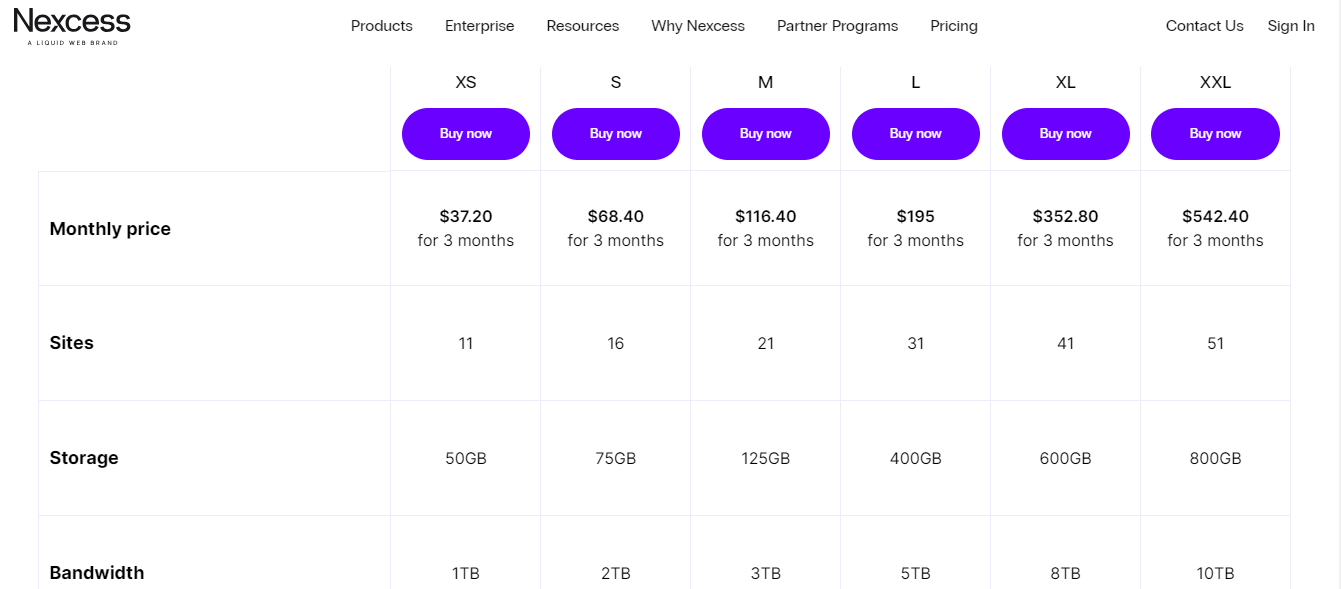
The XS package supports 20 concurrent users, 50GB of disk space, 10 domains, and 1TB of bandwidth, while the XXL package accommodates 120 concurrent users, 800GB of disk space, 50 domains, 32 VCPU, 2GB of RAM, 10TB of bandwidth.
2. Hostinger
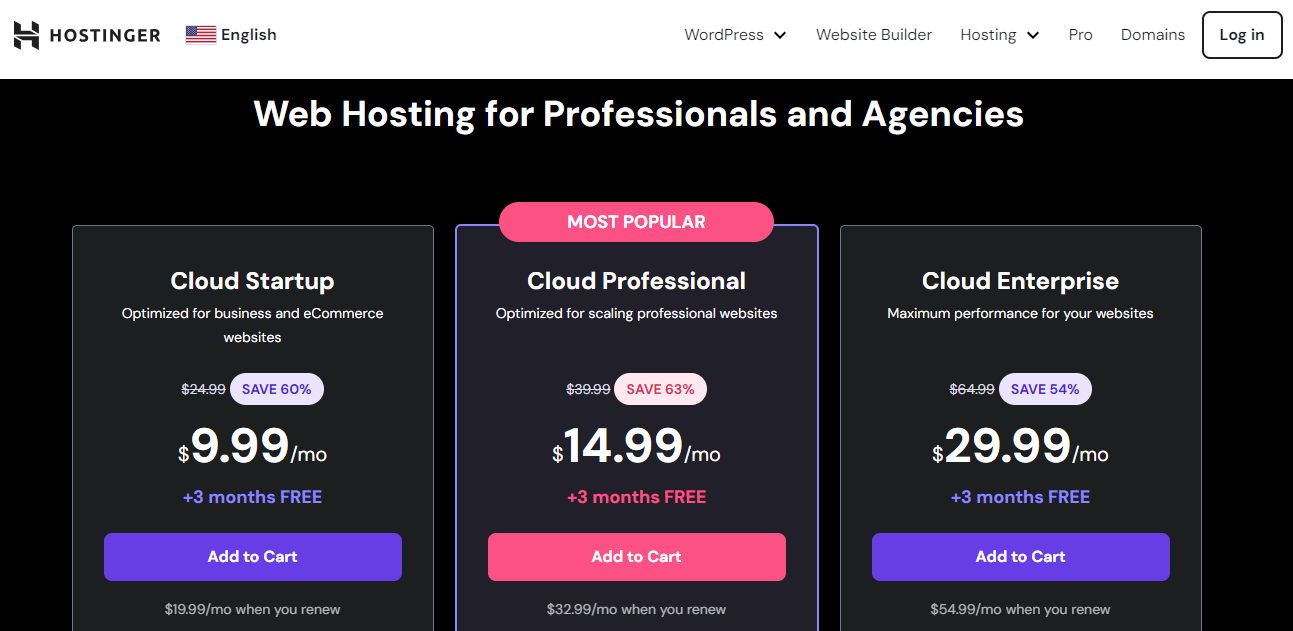
Hostinger offers Magento VPS hosting for businesses that want an accessible entry point into running a Magento store.
One important distinction is that Magento hosting is not available across all Hostinger hosting products. According to Hostinger’s support documentation, Magento 2 requires a VPS because its standard web and cloud hosting plans do not provide Elasticsearch. Hostinger offers a Magento 2 VPS template with the application pre-installed, helping simplify the initial setup process.
Its VPS plans provide different combinations of CPU, RAM, NVMe storage and bandwidth. This gives store owners the flexibility to select infrastructure based on their expected workload and upgrade as their requirements change. However, the business must still consider server administration, application maintenance and performance configuration.
Hostinger is therefore more appropriate for teams that want control over a VPS environment and have the technical capability to manage their Magento installation. Businesses expecting fully managed Magento support should clarify the scope of assistance before purchasing.
Best suited for: Smaller businesses, developers and technically capable teams looking for a VPS-based Magento deployment.
3. GoDaddy
GoDaddy provides VPS hosting that can be configured to run Magento. Its offering is based on flexible virtual server infrastructure rather than a dedicated managed Magento hosting product.
The VPS plans provide configurable server resources, including vCPU, RAM and NVMe storage. Customers can choose between supported operating systems and add control panels such as cPanel or Plesk. GoDaddy also advertises root access, automated snapshot backups, monitoring and DDoS protection.

GoDaddy lists Magento among the applications that can be installed through its hosting environment. This makes the VPS option relevant for businesses that want to deploy Magento while retaining control over server configuration.
However, businesses should distinguish between VPS infrastructure and managed Magento services. Having access to a server does not automatically mean the hosting provider will manage Magento updates, application troubleshooting, performance optimization or custom server configurations.
Before selecting a plan, confirm the required Magento version, server specifications and availability of technical assistance for your intended setup.
Best suited for: Businesses and development teams that want configurable VPS infrastructure with control over their hosting environment.
4. Cloudways
Cloudways is a managed cloud hosting platform that gives businesses a way to deploy applications on cloud infrastructure without managing every server operation directly.
Its Magento hosting solution is designed around the performance and infrastructure requirements of Magento applications. Cloudways documents a technology stack that includes services such as Apache, NGINX, Varnish, Redis and Elasticsearch, alongside PHP and database components.
One of its key advantages is the managed platform experience. Users can manage cloud servers and applications through a centralized interface rather than handling every task through command-line server administration. The platform also provides access to performance and caching technologies that can support Magento workloads.
Cloudways can be a practical option for businesses that want the flexibility of cloud infrastructure combined with a more accessible management layer. Nevertheless, businesses should evaluate the underlying cloud provider, server size, resource limits and total monthly cost. Managed infrastructure does not remove the need to optimize Magento code, extensions, databases and integrations.
Best suited for: Growing eCommerce businesses and development teams looking for managed cloud infrastructure with flexibility over server resources.
5. Hosting.com (Formerly A2 Hosting)
A2 Hosting officially rebranded as Hosting.com in 2025. Businesses researching older hosting comparisons may still encounter the A2 Hosting name, but the current brand is Hosting.com.
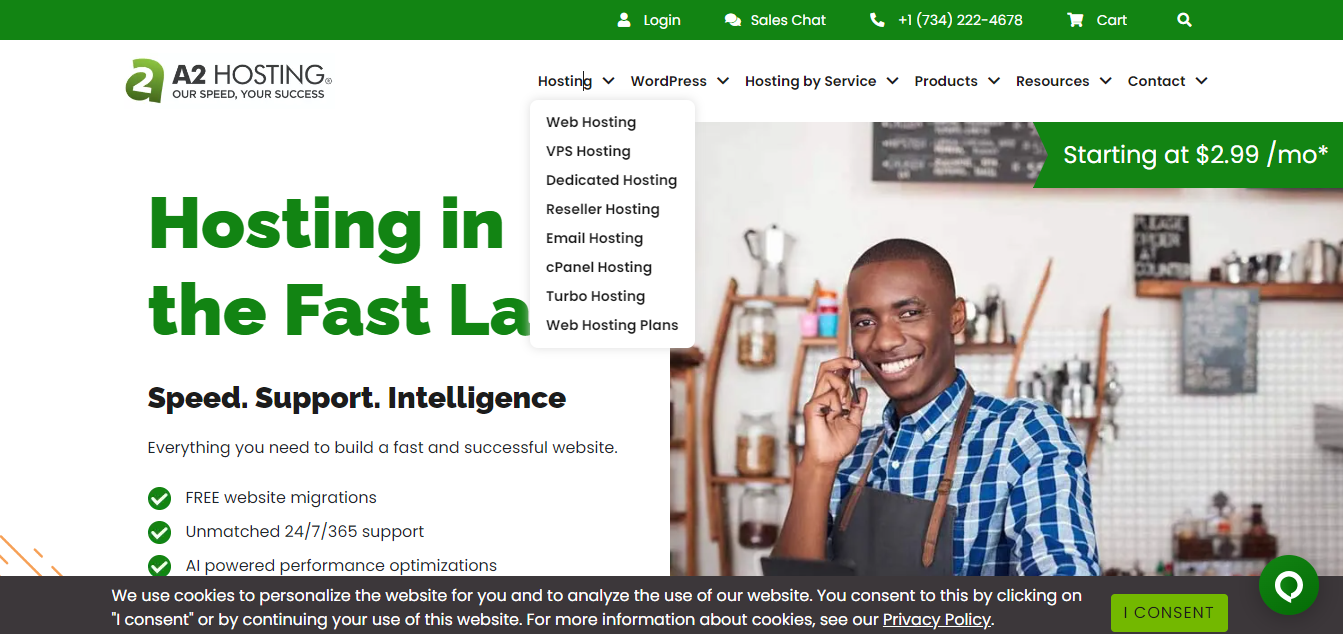
Hosting.com offers hosting services for businesses that need different levels of server resources and configuration flexibility. For a Magento deployment, the relevant option should be evaluated based on its VPS or dedicated server capabilities, rather than assuming that every general hosting plan is suitable.
Magento requires a compatible application environment and sufficient resources to support its database, search and caching requirements. A business considering Hosting.com should therefore confirm the availability of the necessary server configuration, PHP compatibility, database support and administrative access before deployment.
It is also important to clarify the scope of technical support. General hosting assistance and application-level Magento support are different services. Businesses with complex stores may need their own Magento developer or system administrator to handle application configuration and ongoing optimization.
Best suited for: Businesses comparing general hosting infrastructure and VPS or dedicated server options, provided the selected configuration meets their Magento requirements.
ECOMMERCE GROWTH
Magento and Shopify Pricing: Which platform is more cost-effective?
E-commerce startups risk significant financial losses when building a website without a clear plan or a thorough understanding of the platform they intend to use. Choosing between Shopify and Magento requires not just a vision for growth but also a keen awareness of costs.
6. FastComet
FastComet offers cloud VPS hosting with managed server features and configurable resources. This makes it an infrastructure option worth evaluating for businesses planning to run Magento on a cloud server.
Its cloud VPS plans provide different combinations of CPU cores, RAM, storage and bandwidth. The provider also lists features such as DDoS protection, server monitoring, technical support and backup-related capabilities across its cloud hosting offering.
For Magento users, the main advantage is the ability to select a server configuration according to the store’s technical requirements. A suitably configured VPS can provide the resources and access needed to deploy a Magento application.
However, businesses should not assume that a general cloud VPS package is automatically optimized for Magento. Before purchasing, confirm the supported operating system, PHP version, database configuration, search engine requirements, caching services and level of system administration included in the plan.
The distinction between managed server support and managed Magento support is particularly important when evaluating this provider.
Best suited for: Businesses seeking cloud VPS infrastructure with managed server features and the flexibility to configure their own Magento environment.
7. SiteGround
SiteGround is a well-known hosting provider, but it is important to clarify its compatibility with Magento before considering it for an eCommerce project.
According to SiteGround’s official support documentation, Magento is not supported on any of its hosting plans, including its cloud hosting solutions. The provider also states that Magento cannot be installed through its Site Tools application manager.
This means SiteGround should not be treated as a suitable Magento hosting recommendation, even though it offers hosting services for other website platforms.
For businesses that have already selected Magento, choosing an unsupported hosting environment introduces unnecessary technical and operational risks. It is more practical to evaluate providers that explicitly support Magento or offer infrastructure that meets its technical requirements.
SiteGround may still be relevant for businesses using other supported platforms, but it should be excluded from a Magento hosting shortlist.
Best suited for: Businesses using SiteGround-supported platforms. It is not recommended for Magento deployments.
8. Kinsta
Kinsta is widely associated with managed WordPress hosting and provides a platform designed around WordPress performance, security and website management.
However, its hosting environment is not suitable for Magento. Kinsta’s technical documentation states that Magento cannot run on its former Application Hosting environment because Magento requires multiple persistent storage volumes, while that environment supported only one.

Kinsta also announced in February 2026 that its application, database and static site hosting services were moving to Sevalla, allowing Kinsta to focus fully on WordPress hosting.
For businesses comparing hosting providers, this distinction matters. Kinsta may be a strong option for WordPress-based websites, but its managed WordPress service should not be confused with Magento-compatible infrastructure.
If Magento is the required platform, businesses should prioritize providers that explicitly support its storage, application and server requirements.
Best suited for: Businesses running WordPress websites. It is not a suitable choice for Magento hosting.
9. InMotion Hosting
InMotion Hosting offers dedicated Magento hosting solutions through VPS and dedicated server plans. Unlike general-purpose hosting providers, it has a specific Magento hosting offering with infrastructure and services designed for Magento applications.
Its published hosting features include NVMe storage, dedicated resources, SSL certificates, SSH access, configurable PHP versions, DDoS protection and support for technologies such as Redis, Varnish, Elasticsearch and OpenSearch. InMotion also advertises Magento migration assistance and server optimization services through its Launch Assist offering.
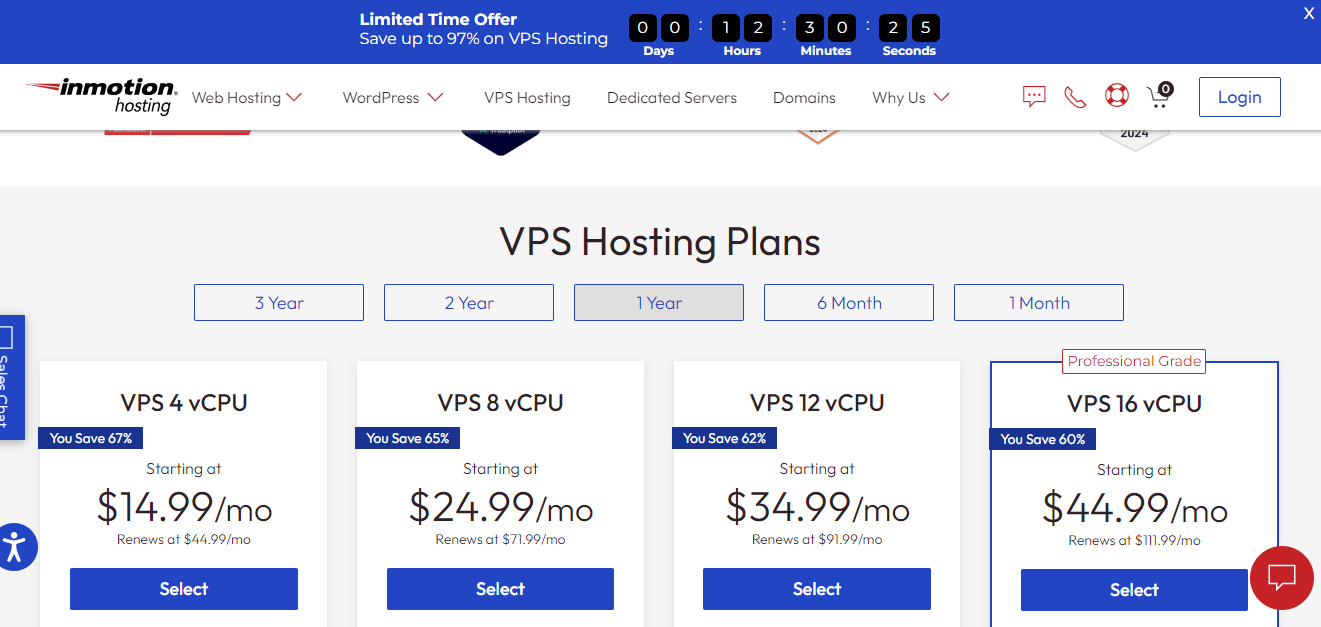
The availability of VPS and dedicated server options gives businesses flexibility when selecting infrastructure for different workloads. VPS hosting may suit many small and medium-sized stores, while dedicated servers can provide more resources and control for demanding environments.
Businesses should still compare the actual CPU, RAM, storage and support included in each plan. Promotional prices and renewal rates may differ, and additional managed services may affect the total cost.
Best suited for: Magento businesses that want dedicated hosting options, configurable resources and access to Magento-related server assistance.
10. Kamatera
Kamatera provides customizable cloud infrastructure that can be configured to run Magento. Its approach is different from providers that offer a fully managed Magento hosting package.
Businesses can configure cloud servers according to their requirements, selecting resources such as CPU, RAM, storage and operating system. Kamatera also provides a Magento application page and a server configuration calculator to help users estimate the infrastructure needed for deployment.
One advantage of this model is flexibility. Businesses can adjust their server configuration and add infrastructure components as their workloads change. This can be useful for development teams that want more control over their hosting architecture.
However, the flexibility also comes with operational responsibilities. Businesses should understand which server management services are included, whether additional administration is required and how backups, security updates, monitoring and Magento maintenance will be handled.
For companies without in-house infrastructure expertise, the cost of external server administration should be included when comparing Kamatera with managed Magento hosting providers.
Best suited for: Developers and businesses that need customizable cloud infrastructure and have the technical resources to manage Magento deployment and maintenance.
ECOMMERCE GROWTH
Shopify Plus vs Magento: Which platform will dominate the e-commerce world?
An increasing number of enterprise-level brands are transitioning between Magento Enterprise and Shopify Plus. Despite this trend, many businesses remain hesitant about switching platforms, largely due to the complexity of comparisons and limited information.
Magento Hosting Providers Compared
The providers in this list offer different levels of Magento compatibility and infrastructure management. The following overview summarizes their positioning.
| Provider | Hosting approach | Magento suitability |
|---|---|---|
| Nexcess | Managed Magento hosting | Strong application-specific option |
| Hostinger | Magento VPS | Suitable with VPS management |
| GoDaddy | VPS hosting | Suitable with correct configuration |
| Cloudways | Managed cloud hosting | Magento-focused managed platform |
| Hosting.com (A2 Hosting) | General hosting and server infrastructure | Verify Magento requirements and support |
| FastComet | Managed cloud VPS | Suitable subject to server configuration |
| SiteGround | General web and cloud hosting | Not supported |
| Kinsta | Managed WordPress hosting | Not suitable |
| InMotion Hosting | Magento VPS and dedicated hosting | Magento-specific hosting option |
| Kamatera | Customizable cloud infrastructure | Suitable with technical management |
The comparison highlights an important difference: not every provider offering VPS or cloud hosting provides the same level of Magento support. Businesses should distinguish between infrastructure that can technically run Magento and a hosting service that actively manages and supports the application.
How to Choose the Right Magento Hosting for Your Business
The best Magento hosting provider depends on the size of the store, expected traffic, technical requirements and internal resources available to manage the platform.
For businesses that want to reduce infrastructure management, managed Magento hosting from providers such as Nexcess or InMotion may be worth evaluating. These options offer more application-specific services than general-purpose server hosting.
For development teams that need flexibility and control, cloud VPS solutions from providers such as Hostinger, GoDaddy, FastComet or Kamatera may provide a suitable foundation. However, the team must be prepared to manage server configuration, security, monitoring and application maintenance.
Cloudways offers another approach by combining cloud infrastructure with a managed platform layer. This can be relevant for businesses that want cloud flexibility without taking full responsibility for every server management task.
When comparing cheap Magento hosting services, businesses should consider whether lower infrastructure costs create additional operational expenses. A self-managed server may require an experienced administrator, while a managed solution may include maintenance and monitoring in its subscription price. Neither model is automatically better. The right choice depends on the resources available within the business.
Before selecting an online Magento hosting service, evaluate several factors:
- Magento version compatibility: Confirm that the server environment meets the requirements of the specific Magento version being deployed.
- Resource allocation: Evaluate CPU, RAM, storage and bandwidth against current and projected workloads.
- Performance architecture: Check support for appropriate caching, search and database technologies.
- Security and recovery: Review backup schedules, restore procedures, monitoring and security responsibilities.
- Technical support: Understand whether support covers infrastructure only or includes Magento application-related assistance.
- Total cost of ownership: Include renewal pricing, managed services, infrastructure upgrades, maintenance and external technical support.
A low initial hosting price does not necessarily translate into lower operating costs. A business may spend more on server administration, performance troubleshooting and maintenance if its hosting environment does not match its Magento requirements.
The best Magento hosting service is therefore not always the most expensive or the cheapest. It is the one that provides the right balance of resources, reliability, technical support and operational flexibility for the business.
Conclusion
Choosing a Magento hosting provider is not simply a matter of finding the cheapest plan or the largest advertised server capacity. The right solution needs to support the technical demands of the platform while aligning with the business’s operational model, growth plans and available resources.
Nexcess and InMotion offer more Magento-specific hosting options, while Cloudways provides a managed cloud hosting approach. Hostinger, GoDaddy, Hosting.com, FastComet and Kamatera offer infrastructure options that require careful evaluation of Magento compatibility and management responsibilities. SiteGround and Kinsta, despite their popularity in the broader hosting market, should not be selected for Magento deployments based on their documented platform limitations.
For businesses with limited budgets, cheap Magento hosting can provide a practical starting point, particularly when the team has the technical expertise to manage its own infrastructure. For growing stores with more complex requirements, investing in a managed hosting environment may reduce operational risks and provide a more reliable foundation.
Ultimately, businesses should evaluate hosting as part of their wider eCommerce technology architecture. Server performance, application development, integrations, security, data management and ongoing optimization all contribute to the reliability of an online store. By comparing providers against these requirements, businesses can identify the best Magento hosting service for their current operations and future growth.
ECOMMERCE GROWTH
Your eCommerce Platform Should Power Growth, Not Limit It.
From Shopify development to complex integrations, WGT Core helps ambitious eCommerce businesses build for performance and scale.