

For B2B businesses, growth rarely comes from a single marketing channel. It depends on reaching the right decision-makers, building credibility, and maintaining visibility throughout a buying journey that can involve multiple stakeholders and extended evaluation periods.
Search Engine Optimization (SEO) supports this process by making a business easier to discover when potential customers actively look for information, solutions, products, or service providers. However, effective SEO is not simply about ranking for more keywords or increasing website traffic. It is about attracting relevant audiences, answering their questions, and helping them move closer to a business decision.
As search continues to evolve with AI-powered experiences, the fundamentals remain important. Businesses still need technically accessible websites, useful content, clear information architecture, and credible expertise.
Understanding these SEO basics gives B2B companies a practical foundation for building long-term visibility and turning organic search into a more sustainable growth channel.
1. What Is SEO and Why Does It Matter for B2B Businesses?
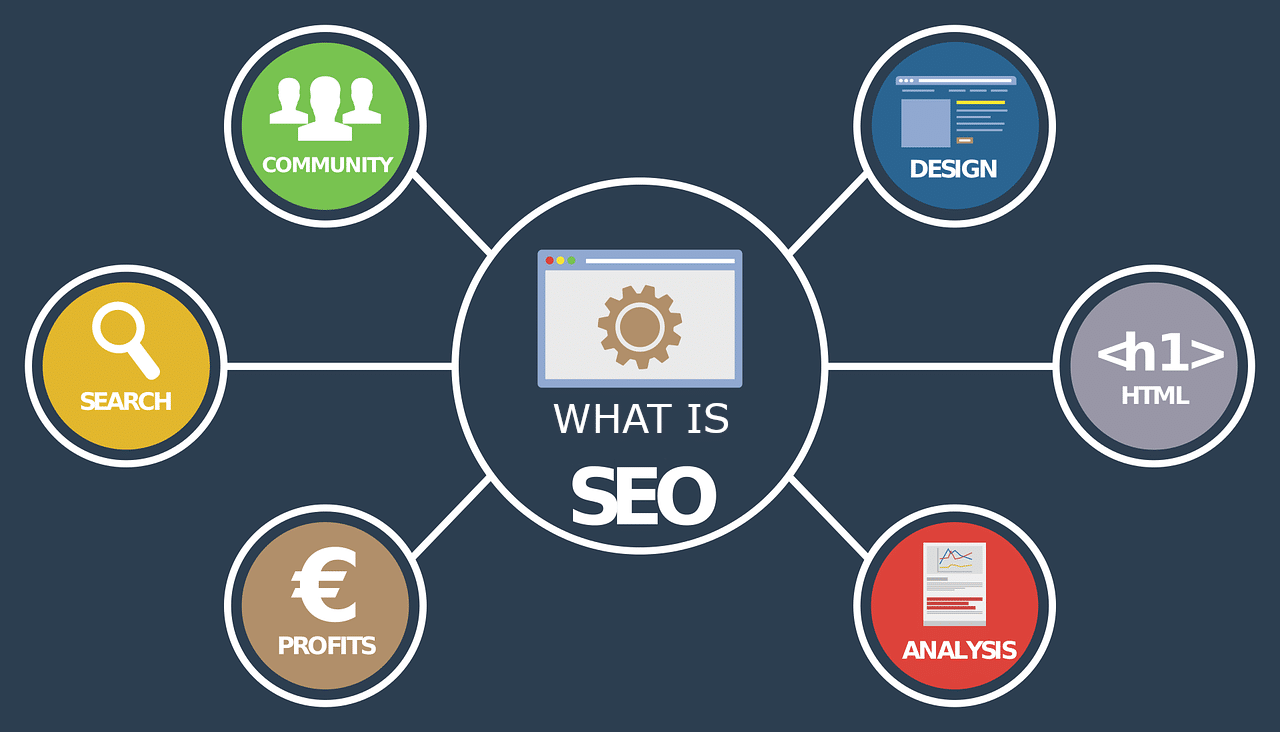
SEO is the process of improving a website’s visibility in organic search results by helping search engines discover, understand, and evaluate its content. It combines technical improvements, content development, website structure, and authority-building activities to make relevant pages more accessible to people searching for specific information.
For B2B companies, SEO has a broader role than generating website visits. It helps businesses become visible at different stages of the buying journey, from early research to vendor evaluation and final consideration.
Consider a company planning to upgrade its eCommerce infrastructure. Its decision-makers might search for:
- Early research: What is headless commerce? What should a scalable eCommerce platform support?
- Solution evaluation: Shopify Plus vs. Magento, enterprise eCommerce platform comparison.
- Vendor consideration: Shopify development agency, Magento migration services.
- Implementation planning: eCommerce migration checklist, ERP integration services.
Each search represents a different need and level of purchase intent. A well-structured SEO strategy helps a business address these needs through relevant landing pages, educational content, service descriptions, and practical resources.
This creates three important business advantages.
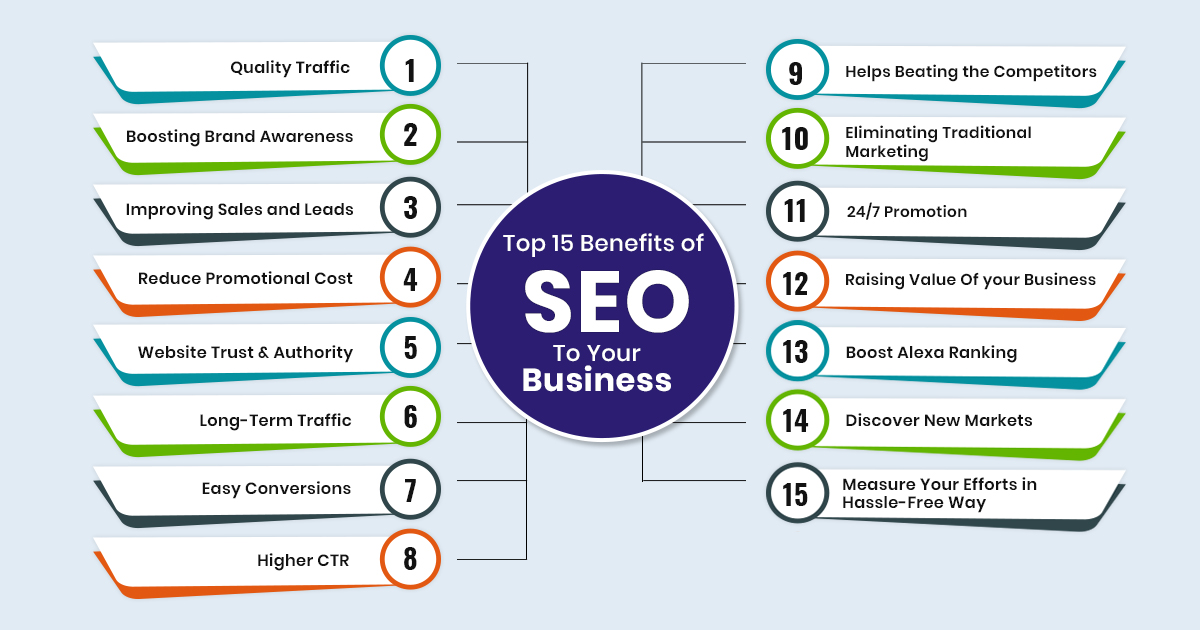
Greater visibility among relevant buyers. SEO helps a company appear when potential customers are actively researching a problem or evaluating a solution. Instead of relying exclusively on outbound communication, businesses can build visibility around existing demand.
Stronger credibility during evaluation. Buyers often compare several providers before making contact. Detailed service pages, informative articles, technical resources, and credible case studies help demonstrate expertise and reduce uncertainty.
A sustainable source of demand. Unlike campaigns that depend entirely on continuous paid distribution, well-performing organic content can continue attracting relevant visitors over time. This does not mean SEO is cost-free or produces immediate results, but it can become a valuable long-term acquisition asset.
For B2B businesses, the objective should therefore be clear: use SEO to connect business expertise with the questions and decisions that matter to potential customers.
ECOMMERCE GROWTH
Content Marketing for eCommerce Websites: Your Comprehensive Guide
By delivering value-driven content across blogs, videos, emails, and social media, eCommerce businesses can build trust, boost visibility, and guide buyers along their journey without relying solely on paid ads.
2. The Three Core Pillars of SEO
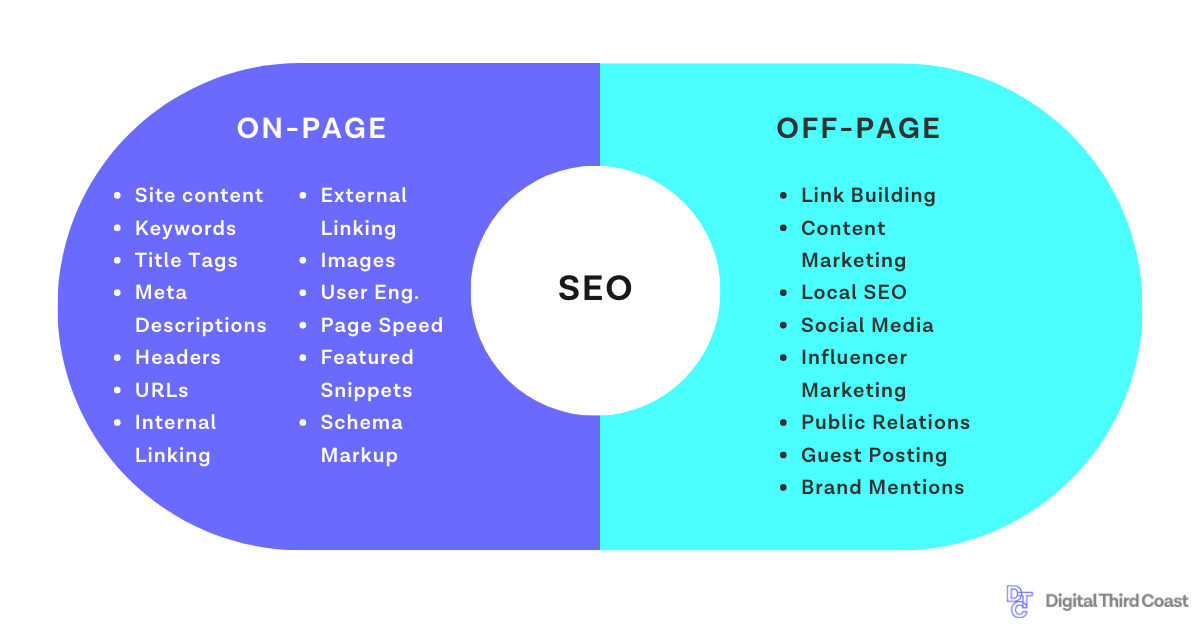
A successful SEO strategy is built on three interconnected areas: technical SEO, on-page SEO, and off-page SEO. Each addresses a different part of how search engines discover, understand, and assess a website.
Technical SEO: Build a Website Search Engines Can Access
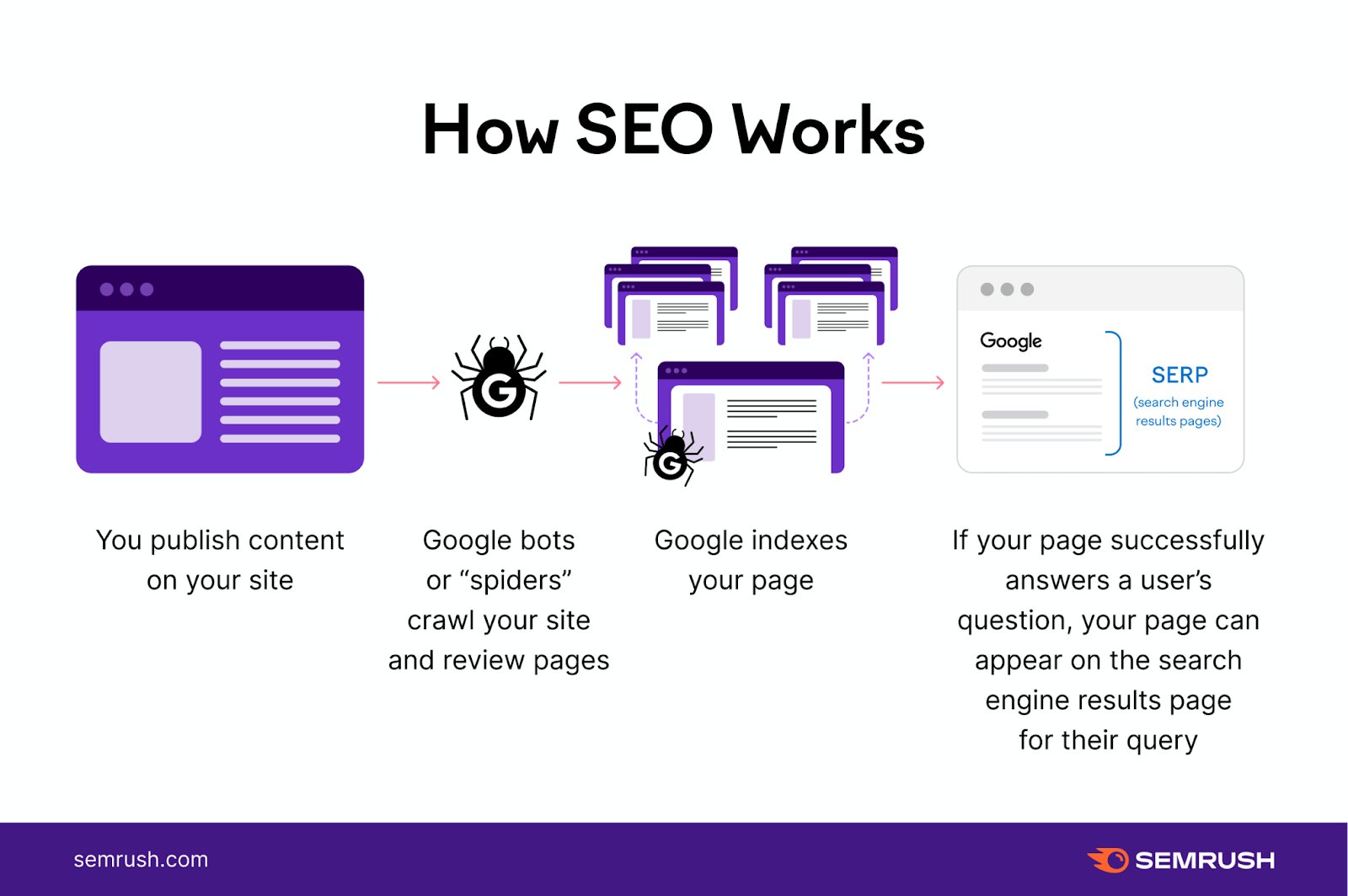
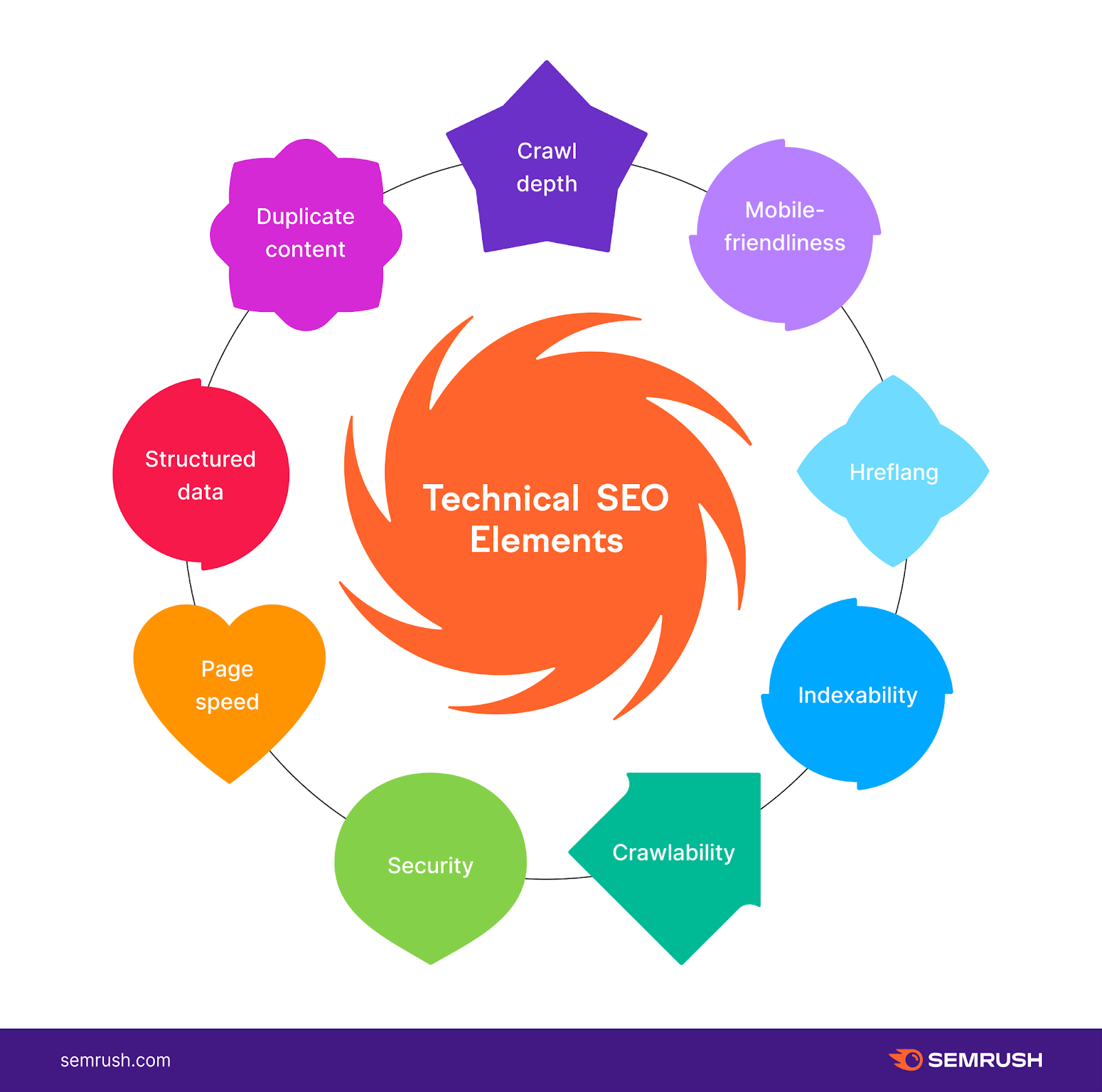
Technical SEO focuses on the infrastructure and technical conditions that allow search engines to crawl, process, and index website content.
Even valuable content may struggle to appear in search results if important pages cannot be accessed or indexed correctly. Technical SEO establishes the foundation that allows other SEO activities to work effectively.
Key technical SEO elements include:
Crawlability and indexability
Search engines need to access important website pages before they can consider them for indexing. Businesses should review their robots.txt configuration, XML sitemap, internal links, and indexing directives to ensure that valuable pages are discoverable.
A robots.txt file controls crawler access, but it does not guarantee that a page will be removed from search results. Indexing restrictions and removal requirements need to be handled using the appropriate mechanisms.
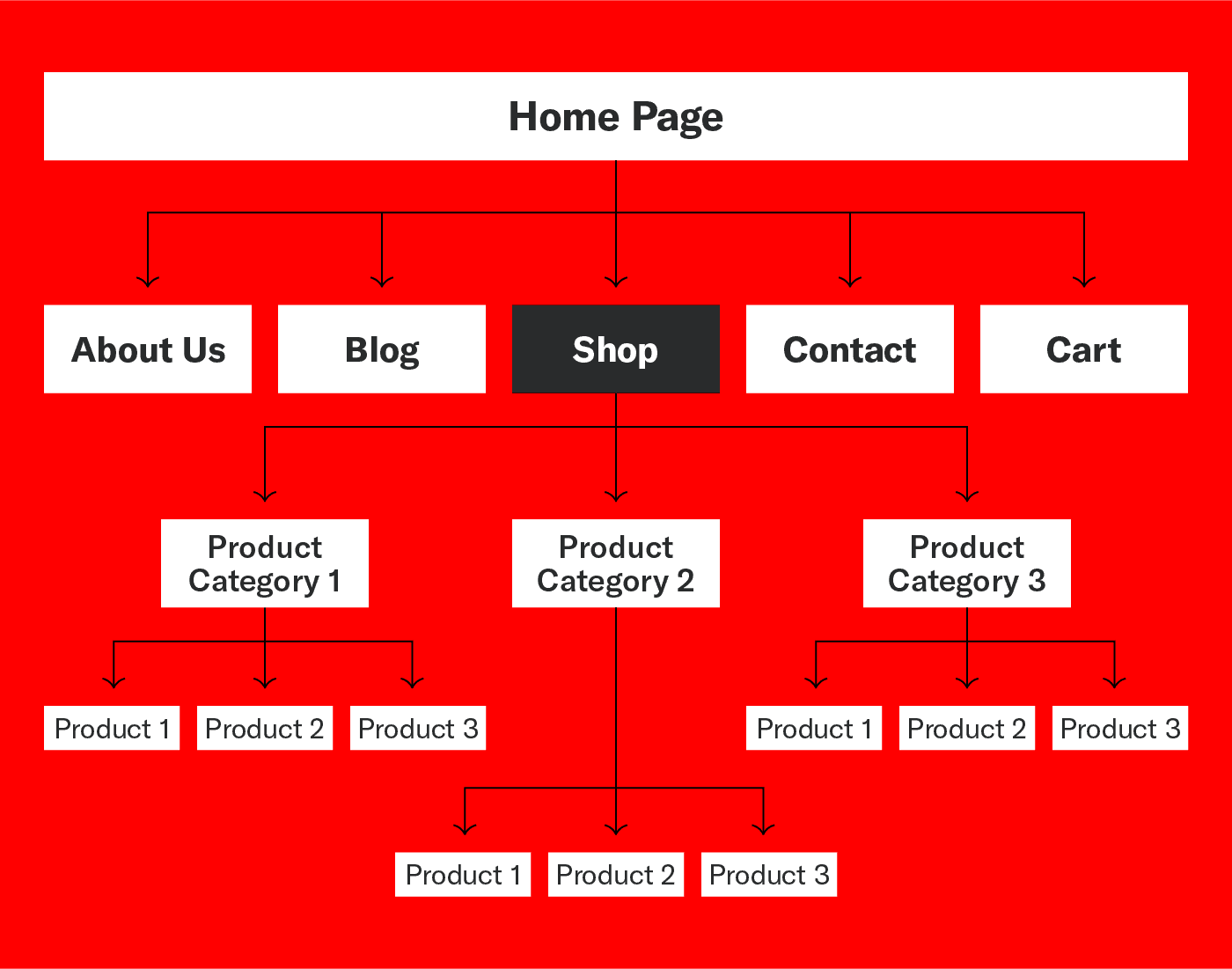
Website architecture and URL structure
A logical website structure helps users and search engines understand the relationship between different pages.
For example, an eCommerce technology company might organize its website into clear sections:
- Development services
- Shopify development
- Shopify Plus development
- eCommerce integrations
- eCommerce SEO
- Case studies
- Insights and resources
For businesses operating on Shopify, a scalable technical foundation may also involve the right development architecture, theme implementation, and integration capabilities. These requirements can be addressed through specialized Shopify development services, Shopify theme development, and Shopify integrations.
Descriptive URLs and meaningful internal links make these relationships easier to understand. They also help visitors navigate from general information to more specific services.
Mobile usability and website performance
A website should provide a consistent experience across desktop, tablet, and mobile devices. Navigation, text, images, forms, and interactive elements should remain accessible and usable on different screen sizes.
Performance also matters. Google’s Core Web Vitals provide measurable indicators of loading performance, interactivity, and visual stability. Businesses should monitor these metrics alongside broader usability issues rather than treating a single performance score as the definition of website quality.
Canonical URLs, redirects, and duplicate content
Duplicate or similar pages can make it harder for search engines to identify which URL should represent the primary version of a piece of content.
Canonical tags help indicate a preferred URL, while redirects help users and search engines reach the appropriate destination when URLs change. These elements are particularly important during website redesigns, platform migrations, and large-scale URL restructuring.
For businesses moving from legacy platforms to Shopify, migration planning should account for URL mapping, redirects, content structure, and technical SEO requirements. A structured Magento to Shopify migration or WooCommerce to Shopify migration can help businesses manage the technical transition while minimizing disruption to existing search visibility.
Technical SEO is not a one-time setup. Changes to website architecture, content management systems, integrations, and templates can introduce new issues. Regular monitoring helps businesses identify problems before they affect important pages.
On-Page SEO: Make Every Page Relevant to Search Intent
On-page SEO focuses on optimizing individual pages so that their content clearly addresses users’ needs and communicates its relevance to search engines.
For B2B websites, this means more than inserting keywords into page copy. Each page should have a defined purpose, a clear audience, and information that supports a particular stage of the buying journey.
The main elements include:
Keyword research and search intent
Keyword research helps identify the language potential customers use when looking for information, services, or solutions.
However, search volume alone should not determine which keywords a business targets. A keyword with lower search volume may have greater commercial value if it reflects a specific business requirement or a stronger purchase intent.
For example, a general search such as “eCommerce platform” may indicate early research. A more specific search such as “Shopify Plus development agency” suggests that the user may already be evaluating implementation partners.
A practical keyword strategy should consider:
- Relevance to the company’s services and expertise.
- The searcher’s underlying problem or objective.
- The level of commercial intent.
- The type of content required to satisfy the search.
- The business value of attracting that audience.
The goal is to match the right page with the right search intent, rather than forcing every keyword into the same service page or blog article.
Title tags and meta descriptions
The title tag communicates the page’s main topic and can influence how its title link appears in search results. It should be unique, descriptive, and aligned with the content.
A meta description provides a concise summary of the page. Search engines may use it to generate a search snippet, although they can also select relevant text from the page itself.
For example:
- Title tag: Shopify Plus Development Services for Growing eCommerce Businesses
- Meta description: Explore Shopify Plus development services for scalable storefronts, advanced integrations, and more efficient eCommerce operations.
Avoid repeating the same title and description across multiple pages. Each should accurately represent the specific content and give users a clear reason to visit.
Heading structure and content organization
A clear heading hierarchy helps readers understand the structure of a page and find relevant information quickly.
Use one descriptive H1 to communicate the main topic, followed by H2 and H3 headings that organize related sections logically.
Headings should describe the content that follows. Adding keywords to headings can help clarify relevance, but inserting keywords where they do not naturally belong makes the page harder to read.
Internal linking and descriptive anchor text
Internal links connect related pages across a website. They help visitors discover additional information and allow search engines to find other important pages.
For example, an article about eCommerce platform migration could link to relevant Shopify migration services, integration capabilities, and case studies. A technical article about enterprise commerce architecture could also direct readers to Shopify Plus development when the service is relevant to the topic.
Anchor text should describe the destination page clearly. Avoid generic phrases such as “click here” when a more descriptive link would provide better context.
On-page SEO works best when every page has a distinct role within the website, rather than competing with other pages for the same search intent.
ECOMMERCE GROWTH
Technical SEO for eCommerce Websites: Pro Tips You Can’t Ignore
In today’s digital landscape, mobile devices account for a significant portion of online shopping traffic. Google has adopted a mobile-first indexing approach, meaning that it primarily uses the mobile version of a website to determine its ranking.
Off-Page SEO: Strengthen Your Website’s Credibility
Off-page SEO refers to activities outside a website that can contribute to its visibility, reputation, and authority.
One of its most recognized elements is backlink acquisition. A backlink is a link from another website pointing to your website. Relevant links from credible sources can help search engines discover pages and understand how other websites reference your content.
However, backlink quality matters more than simply accumulating a large number of links.
For B2B companies, useful off-page SEO activities include:
Earning relevant backlinks
Create valuable resources that industry publications, professional communities, technology partners, and other relevant websites may want to reference.
Examples include original research, practical industry insights, technical guides, and detailed case studies.
Building brand visibility
Participating in industry discussions, professional events, interviews, and relevant publications can help increase awareness of a business.
These activities should create genuine value and recognition rather than focus exclusively on obtaining links.
Developing a consistent brand presence
A clear and consistent business identity across the website, professional profiles, and relevant industry platforms makes it easier for potential customers to understand who the company is and what it offers.
Off-page SEO should prioritize genuine reputation-building. Buying links, participating in manipulative link schemes, or creating large numbers of low-quality links can introduce risks rather than provide sustainable value.
3. Build an SEO Content Strategy Around the B2B Buying Journey
Content is where SEO connects a company’s expertise with the questions potential customers are trying to answer.
For B2B businesses, a content strategy should reflect the complexity of the buying journey. A decision-maker researching a business challenge needs different information from someone comparing vendors or preparing to select a technology partner.
A useful approach is to organize content around three stages.
Awareness: Help buyers understand the problem
At this stage, potential customers are identifying challenges, exploring opportunities, and learning about possible solutions.
Content should explain concepts and provide practical context without immediately pushing a service.
Examples include:
- What Is Headless Commerce and When Does a Business Need It?
- Common eCommerce Website Performance Problems
- How AI Is Changing Product Discovery in eCommerce
Consideration: Help buyers evaluate their options
Once buyers understand their challenges, they begin comparing approaches, technologies, and potential providers.
Content should offer more detailed analysis, explain trade-offs, and help readers assess different solutions.
Examples include:
- Shopify Plus vs. Magento: Which Platform Fits Your Business?
- Rebuild or Migrate? How to Evaluate an eCommerce Platform Change
- What to Consider Before Integrating an eCommerce Store with ERP
Decision: Help buyers assess implementation partners
At this stage, potential customers need evidence that a provider can deliver the required solution.
Relevant content includes service pages, detailed case studies, implementation approaches, and technical capabilities.
Examples include:
- Shopify Development Services
- Shopify Plus Development
- eCommerce Integration Services
- eCommerce Project Case Studies
A strong B2B content strategy connects these stages through internal links and relevant calls to action. An educational article should help readers explore the next logical resource, while a service page should make it easy to understand the provider’s capabilities and initiate a conversation.
This approach also helps prevent a common content problem: publishing many articles that attract visitors but do not connect to the company’s actual services or commercial priorities.
4. SEO in the Age of AI Search: Why the Fundamentals Still Matter
Search behavior is evolving as AI-powered experiences change how people discover and evaluate information.
Google’s AI Overviews and AI Mode can provide synthesized responses and links to supporting websites. This creates new ways for users to discover information, but it does not make traditional SEO fundamentals obsolete.
Google’s current guidance states that the same foundational SEO practices remain relevant to its AI search features. Websites do not need a separate AI-specific optimization system or special structured data to become eligible for these experiences. Pages must still meet the relevant technical requirements, be indexed, and comply with Search policies.
For B2B businesses, this reinforces several practical priorities.
Create content that contributes something original
Generic articles that repeat widely available information provide limited differentiation. Businesses should use their actual expertise to explain industry challenges, technical decisions, implementation considerations, and practical trade-offs.
For example, an eCommerce technology partner can provide more value by explaining the risks involved in migrating complex product data than by simply defining what platform migration means.
Make important information easy to understand
Organize content around clear questions and meaningful sections. Explain technical terms when necessary, use descriptive headings, and provide direct answers before expanding into supporting details.
This improves usability for readers and makes the page’s subject matter easier to interpret.
Support claims with credible evidence
Use reliable documentation, original research, verified project information, and clearly identified sources.
If a company refers to a client result, performance improvement, or implementation outcome, the claim should be supported by actual evidence. Do not use unsupported statistics or imply that a result is guaranteed.
Maintain a technically accessible website
Important content should be crawlable, available in text form, connected through internal links, and supported by appropriate structured data where relevant. Structured data should accurately reflect visible page content.
Measure performance beyond traditional rankings
Search visibility is still important, but businesses should also examine qualified organic visits, relevant landing-page engagement, enquiries, and opportunities influenced by organic search.
The key is not to chase every new AI search trend. It is to build a website that communicates useful information clearly and demonstrates genuine expertise.
5. Measure SEO Performance Through Business Outcomes
SEO performance should be evaluated against the objectives of the business, not just the number of keywords appearing in search results.
For B2B companies, a useful measurement framework connects visibility, engagement, lead generation, and commercial contribution.
Search visibility
Monitor organic impressions, clicks, click-through rates, average search positions, and the queries generating visibility.
Google Search Console can help identify which queries and pages appear in Google Search, as well as potential indexing and technical issues.
Relevant organic traffic
Use analytics tools to understand how visitors arrive at the website, which landing pages they use, and whether the traffic matches the company’s target audience.
A rise in traffic is not necessarily a positive outcome if most visitors have no relevance to the company’s products or services.
Engagement and conversion
Evaluate whether visitors explore relevant service pages, interact with useful resources, submit enquiry forms, or take other meaningful actions.
For B2B businesses, conversions should reflect the actual customer journey. A request for consultation, qualified enquiry, or demo request may be more meaningful than a general page view.
Lead quality and pipeline contribution
Connect organic search activity with CRM data where possible. This helps marketing and sales teams assess whether organic leads match the target customer profile and progress through the sales process.
It is also important to recognize that B2B buying journeys often involve multiple touchpoints. Organic search may introduce a prospect to the business, while later interactions through referrals, direct visits, or sales outreach contribute to the final conversion.
SEO reporting should therefore distinguish between direct conversion and broader influence on the pipeline.
A practical SEO dashboard should help management answer three questions:
- Are we becoming more visible for searches that matter to our target market?
- Are we attracting visitors who are relevant to our business?
- Is organic search contributing to qualified enquiries and commercial opportunities?
These questions provide a more useful basis for investment decisions than rankings or traffic growth in isolation.
6. Common SEO Mistakes That Limit B2B Growth
Even businesses that invest consistently in SEO can struggle to generate meaningful results when their activities are disconnected from customer needs or business priorities.
Several common mistakes are worth addressing.
Targeting keywords without understanding search intent
High-volume keywords may look attractive, but they do not always represent valuable business opportunities. Targeting a broad keyword with a service page when users expect an educational guide can result in poor relevance and weak engagement.
Start with the searcher’s objective, then determine the most suitable page format.
Publishing content without a clear strategic purpose
A high publishing frequency does not automatically produce better SEO performance. Content should address real audience needs, support the company’s expertise, and connect to relevant products or services.
Before creating a new article, assess whether an existing page already covers the same topic and whether the new content offers a meaningful additional perspective.
Ignoring technical SEO
Broken links, incorrect redirects, blocked resources, duplicate URLs, and indexing issues can undermine the visibility of important pages.
Technical SEO should be included in website maintenance and development workflows, not treated as a separate task that only happens during an SEO audit.
Overlooking conversion experience
Attracting visitors is only part of the process. If service information is unclear, navigation is difficult, or enquiry forms are unnecessarily complicated, potential customers may leave without taking action.
SEO and conversion optimization should work together to create a consistent journey from search discovery to business enquiry.
Chasing backlinks instead of building credibility
Large numbers of irrelevant or manipulative links do not establish meaningful authority. Focus on useful resources, credible industry relationships, and genuine references from relevant websites.
Following AI Search shortcuts without evidence
Creating unnecessary AI-specific files, inserting unnatural question-and-answer blocks, or pursuing artificial mentions does not replace strong SEO fundamentals.
Google’s guidance emphasizes useful, original content and established SEO practices rather than special shortcuts for AI search visibility.
7. How to Build a Practical SEO Foundation for Your Business
SEO does not need to begin with a large-scale campaign. Businesses can establish a stronger foundation through a structured process that connects technical improvements, content priorities, and measurable outcomes.
Step 1: Audit your existing website
Review the current website to identify issues affecting search visibility and user experience.
Start with:
- Indexing and crawlability.
- Robots.txt and XML sitemap configuration.
- Page titles and meta descriptions.
- Heading structure and content quality.
- URL consistency and duplicate pages.
- Internal links and broken links.
- Mobile usability and website performance.
- Existing organic search performance.
The audit should prioritize issues based on their impact on important business pages, rather than treating every technical warning as equally urgent.
Step 2: Define your target audience and keyword priorities
Identify the industries, business roles, challenges, and solutions that matter to your company.
Map relevant search queries to the appropriate pages. Separate informational topics from commercial searches and prioritize keywords that align with your services and customer needs.
Step 3: Strengthen your website structure
Ensure that important services are easy to discover and that related pages are connected through meaningful internal links.
A visitor should be able to move naturally from an educational article to a relevant service page, supporting case study, or contact opportunity.
For eCommerce businesses, this may also mean aligning SEO priorities with the underlying platform and implementation roadmap. A well-planned Shopify Plus development solution or a suitable Shopify integration strategy can support the broader digital infrastructure needed to deliver a consistent customer experience.
Step 4: Improve existing content before scaling production
Review existing pages to identify outdated information, unclear explanations, overlapping topics, and missing information.
Improve pages that already attract relevant search visibility before investing heavily in new content. Add original insights and evidence where available, and make sure each page provides a distinct value.
Step 5: Establish an ongoing measurement process
Use Google Search Console and an analytics platform to monitor search visibility, organic traffic, landing-page performance, and conversions.
Where possible, connect website enquiries with CRM records to assess lead quality and pipeline contribution.
SEO should be reviewed regularly, with priorities adjusted based on actual performance, business changes, and evolving customer needs.
Conclusion: SEO Is a Long-Term Business Growth Asset
SEO is not simply a technical marketing activity or a way to increase website traffic. For B2B businesses, it is a foundation for becoming discoverable, communicating expertise, building trust, and supporting potential customers throughout a complex buying journey.
The fundamentals remain straightforward: make your website accessible to search engines, create useful and relevant content, structure pages around search intent, build genuine credibility, and measure performance against business outcomes.
As search evolves with AI-powered experiences, businesses that invest in these fundamentals will be better positioned to adapt without relying on short-lived optimization tactics.
For companies looking to turn organic visibility into meaningful commercial opportunities, SEO should be integrated into the broader digital growth strategy.
ECOMMERCE GROWTH
Your eCommerce Platform Should Power Growth, Not Limit It.
WGT help eCommerce businesses strengthen their digital presence through technology and growth-focused solutions. Explore our eCommerce SEO services to understand how a more structured SEO approach can support your website’s visibility and business objectives.